


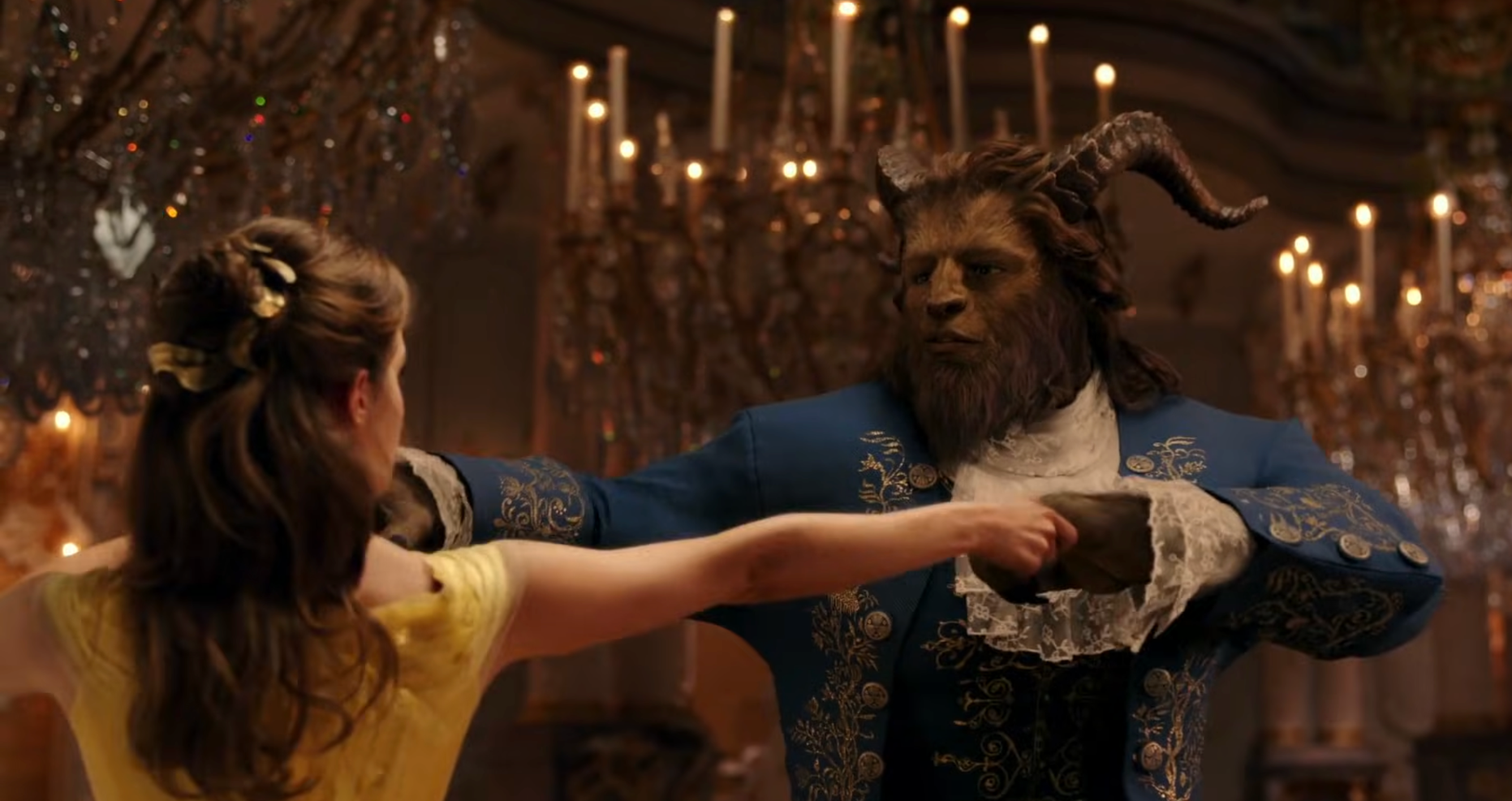
The luster of the silver screen is fading fast, and it’s all thanks to unoriginality in the studios, and perhaps the audience’s willingness to play into it.
Every time a new movie is announced, it usually ends up being a sequel, a reboot or a live-action version of an older film. This trend is apparent whenever a new blockbuster begins to make the advertising rounds, except it’s very familiar.
Disney is arguably one of the biggest perpetrators of this.
The Walt Disney Company has been the leading face in creative, animated stories for nearly half a century, extending its prosperity from the drawing studio to international conglomerates and amusement parks across the world. But its magic has been losing its touch in the past years.
The tides shifted when Disney Studios announced their first modern live-action film, “Cinderella,” in 2015 as a revitalization of the 1950 classic — previous live-action retellings were few and far between like the 1996 “101 Dalmations.” But in a modern framing, “Cinderella” was a modest expansion of their storytelling, but it quickly spiralled out of control.
In the past 11 years, Disney has turned many more of its classic animated movies into live action versions like “The Lion King,” “The Little Mermaid,” “Snow White” and “Aladdin.” These animated movies were already massively popular and successful in their time, marking the bulk of Disney’s “Renaissance Age” in animation.
So when their new versions were released in glamorous excess, and in “The Lion King’s” case, powerful photorealism, audiences flocked to the theaters. With Disney remakes now exceeding as many as 20 movies, and the highest of which grossing an astonishing $1.6 billion with “The Lion King,” it’s evident that Disney captured lightning in a bottle they thought they could sustain.
But following the covid-19 pandemic and the crash of many cinemas in the United States, the cracks in Disney’s new not-so-innovation began to show.
For example, Disney’s 2025 remake of “Snow White” not only received poor critical reception but was also one of Disney’s biggest financial blunders in their history, losing approximately $170 million.
This highlights the underlying problem — when big studios remake their own movies or make sequels just because they know people will pay to see them. Instead of trying something new, they play it safe to make easy money. That’s when it starts to feel less creative and more about them making profit than coming up with something new.
Instead of creating something new or different, big studios resort to what they have already worked on years ago. It’s not a creative expression of Disney artists anymore, but a financial pillow they can fall back on.
Recently, movies like “Moana,” “Inside Out” and the live-action “Lilo and Stitch” have all received sequels or remakes, despite the former two both being released in the last decade and the latter being released in the 2000s.
The Walt Disney Company knows people are more likely to show up to theaters to watch characters they recognize and already love. But the action is only one piece of the puzzle; the reception is another. Although it may seem like Hollywood is running out of ideas, the audience also plays a role in this problem.
When original movies are released in theaters, they do not make as much money as sequels or franchise hits do.
Many people like to say they want new ideas instead of the same things, but when it comes to buying a ticket for something they don’t know much about, they will end up choosing something familiar instead.
For example, perhaps the most egregious example of blatant box-office fishing was the release of “Zootopia 2” last year. The sequel quickly rose to become Hollywood’s highest grossing animated movie of all time with a box office revenue of $1.85 billion.
It’s hard to argue against that sort of profit, and it certainly makes it less risky for studios to lose money from making a sequel. New, original stories just don’t stand a chance against big studios and nostalgia.
This brings up an important point about Hollywood’s responsibility. Hollywood has to balance making money with being creative in what they produce. Studios are businesses, so of course they care about their profit. Movies are very expensive to make, and if they “flop” in theaters, the studio can lose a lot of money, so in dire circumstances, maybe being derivative is the best option — but not to consumers who care about artistic integrity.
Movies are also a type of form of art. If the studios only cared about the money, then the stories might come out as bland, boring or repetitive to its audience. However, that sentiment can be hard to avoid.
There’s a difference between using common story ideas and straight-up remaking the same movie.
A lot of stories are based on old themes that have been around for a long time. For example, the idea of forbidden love comes from “Romeo and Juliet” by William Shakespeare, and big adventure stories go back to “The Odyssey” by Homer. Tons of movies and books use the same ideas. It doesn’t mean they’re copying, they’re just using common story patterns that everyone builds on.
But in a world of corporate greed, the fundamental “lack” of originality in storytelling shouldn’t be an excuse — it’s never been one to anyone else.
















Wendy Simpson • Mar 14, 2026 at 3:10 pm
I’m right there with you. As a published author and an avid reader, I’ve seen so many incredible stories—fiction and nonfiction—that would make fantastic films if Hollywood weren’t so risk‑averse. Your article really captures that truth.
I once wrote something along the same lines, but a magazine passed on it with the note, “We don’t like articles that tell Hollywood what they should or shouldn’t do.” That reluctance to challenge the industry might be part of why these conversations rarely get the visibility they deserve.