Samantha Barrientos was three years old when her parents told her the truth: She was the only person in her family who was a legal U.S. citizen. That conversation shaped the rest of her childhood.
No kid should have to carry that weight, but for millions of children in mixed-status families, fear of deportation is as routine as homework.
Barrientos, now a youth organizer with the Coalition for Humane Immigrant Rights (CHIRLA), runs the Dream Center on the Van Nuys High School campus, where she connects immigrant students with legal resources, necessities, planning for the future, counseling and support. She has spent most of her life afraid that Immigration and Customs Enforcement (ICE) would tear her family apart.
Her grandfather was detained when she was four. ICE threatened her aunt and cousin if he wasn’t deported. That was just the beginning.
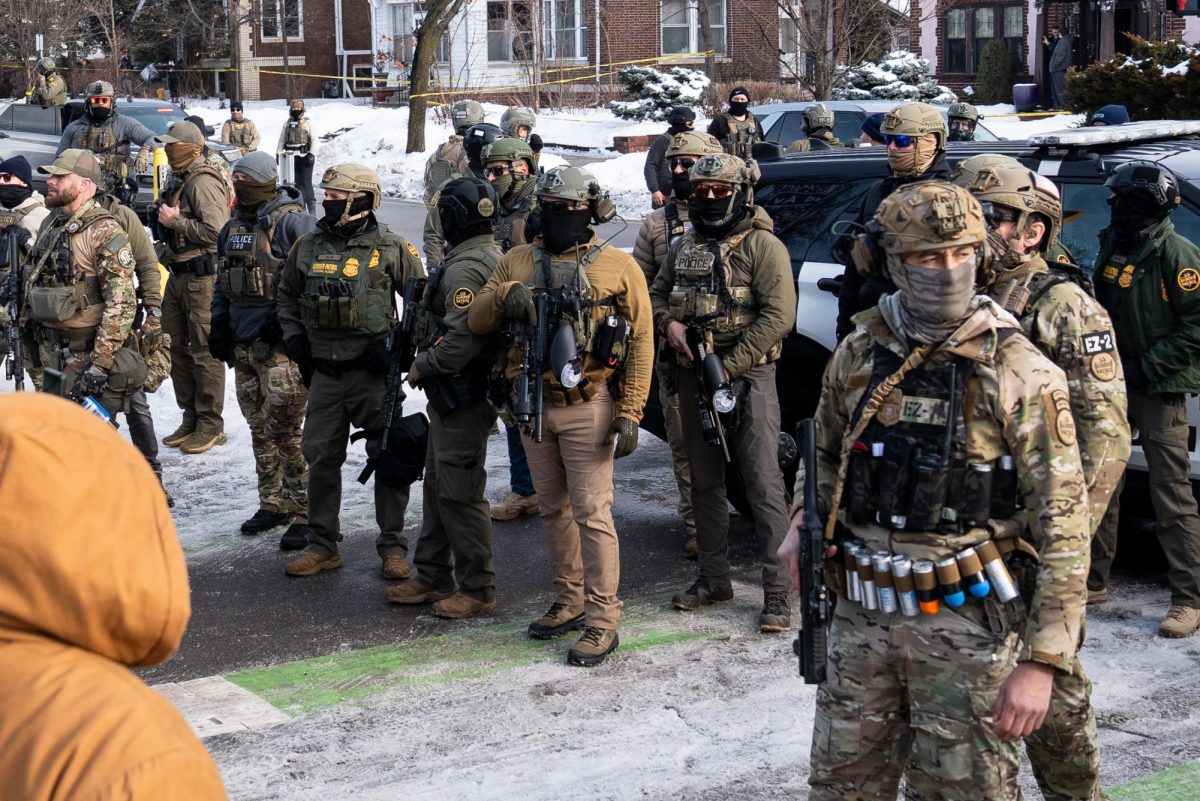
In 2025, ICE has escalated raids across the country and the consequences have reached far beyond undocumented immigrants. U.S. citizens have been caught in the crossfire, sometimes fatally.
ICE has existed for more than 20 years, the past year has been especially brutal. In Minneapolis, Renée Good, a 37 year-old U.S.-born citizen, was shot three times while sitting in her car. Good had been serving as a legal observer of ICE activity in her neighborhood. According to BBC News, she was trying to maneuver around agents when they opened fire. An autopsy commissioned by her family, reported by NBC News, found that one bullet went through her head.
Not even three weeks later, Alex Pretti, also a U.S.-born citizen and also 37 years old, was killed after being accused of holding a gun. Video footage reported by ABC News showed him holding his phone. He was filming ICE before he was shoved and taken down. One agent was seen hitting Pretti multiple times before 10 shots were fired in less than five seconds.
These shootings weren’t isolated incidents. They’re part of a pattern that has left families across the country, documented and undocumented alike, afraid to leave their homes.
Some undocumented immigrants brought to the U.S. as children have protection under Deferred Action for Childhood Arrivals (DACA). But DACA is temporary, limited in scope and not available to everyone. It’s a bandaid on a wound that keeps getting deeper.
And even DACA is under attack. The Department of Homeland Security is currently prohibited from approving first-time applicants, and the program’s future remains uncertain under the current administration. For undocumented students who grew up in this country losing DACA doesn’t just mean losing work permits. It means losing any sense of security..
The political justification for aggressive enforcement rests on the claim that undocumented immigrants are dangerous. President Trump once referred to Mexicans as criminals or rapists. But research consistently shows otherwise. A 2020 study published in the Proceedings of the National Academy of Sciences found that undocumented immigrants are significantly less likely to be arrested for violent crimes than U.S.-born citizens. The narrative doesn’t match the data.
Supporters of ICE argue that immigration laws exist for a reason and that enforcement is an issue of national security. That argument has some logic to it. But enforcement that kills unarmed U.S. citizens, terrorizes children and families and operates without transparency isn’t public safety. It’s intimidation. There’s a difference between a working immigration system and a government that’s lost any sense of proportion.
The government and ICE aren’t addressing the causes of undocumented immigration. They’re punishing the people caught in a broken system.. They don’t see the faces of children when their parents are taken away or the loss of a family member. They see the perfect scapegoats.
This isn’t an abstract issue at Van Nuys High School. The Dream Center on campus exists because the need is real. Barrientos works with students who are afraid to talk about their family’s status, who have missed school after local raids and who don’t know where to turn when a parent is detained. Some have joined walkouts and protests only to be told they’re disrupting the peace. But there is no peace when our classmate’s parents don’t come home.
Barrientos grew up never being allowed to talk about her family’s status for fear of being ratted out. But at 13, after ICE raided her father’s workplace, something shifted. Her father escaped only because a coworker hid him in the back of the truck. That was the moment Barroientos decided she couldn’t stay silent. She joined CHIRLA’s Wise Up program and eventually that path brought her to Van Nuys High School, where she now runs the Dream Center.
No one should be afraid to walk to school. No one should wonder if their parents will still be there when they get home. Barrientos found her voice at 13 because she had no other choice. Now she’s here helping students who are living with the same fear she grew up with. The rest of us have a choice. We can walk by the Dream Center without thinking about why it exists, or we can demand that immigration enforcement in this country answer for what it’s become.
This article originally appeared in the Early Spring 2026 print edition.