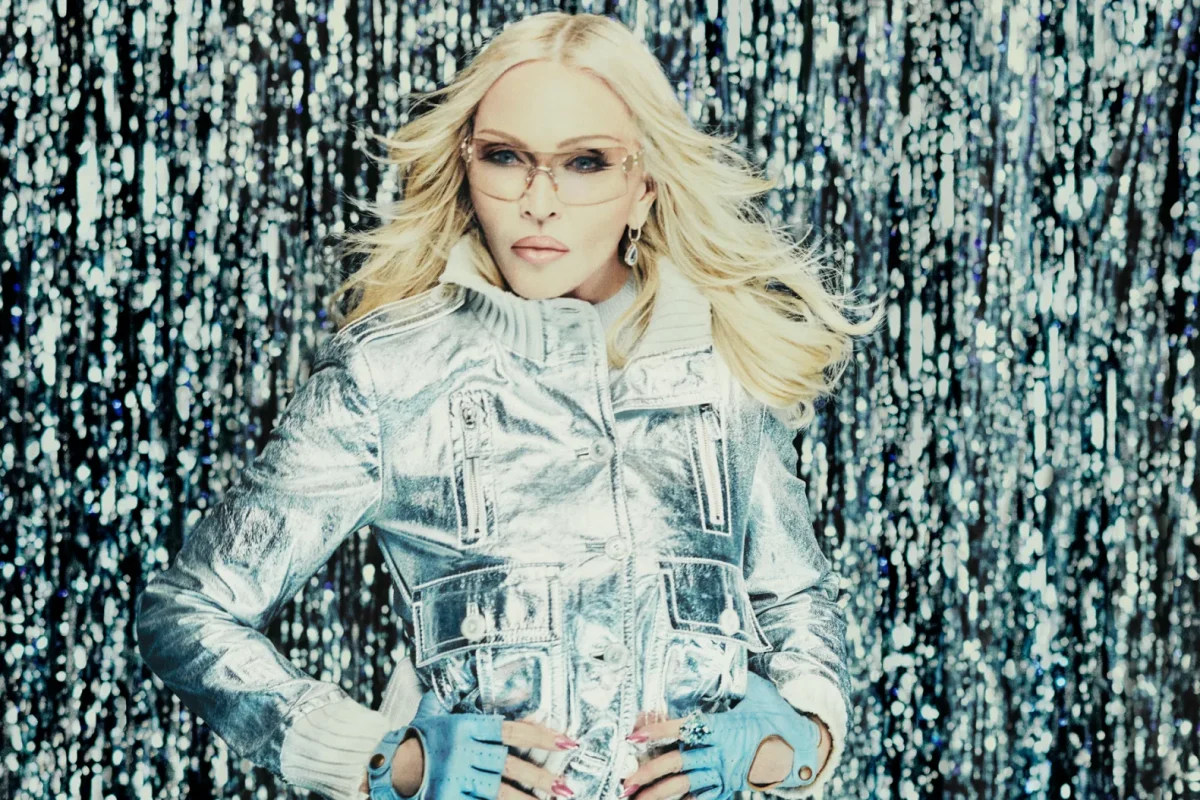
The proclaimed Queen of Pop, Madonna Ciccone, and her newly announced album “Confessions II,” the follow-up to her 2005 album “Confessions on a Dance Floor,” is the newest comeback to be gazed upon with apathy.
But even before the music is released, its cultural impact is already dissected, scrutinized and discarded. And it’s because in the eyes of a patriarchal culture and society, a legend, let alone a woman, shouldn’t stoop so low as to be an artist.
Successive summers of pop richness that included the breakout of names like Sabrina Carpenter, Chappell Roan, Olivia Dean, Charli XCX, Tate McRae and Zara Larsson have propagated an un-needy pop culture that prioritizes new, younger faces. For now.
Longevity has never been the name of the game — it’s ins or outs only. And that is due in part to what exactly happens when a once doe-eyed pop star goes on in their years — they get older.
Rare exceptions like Taylor Swift, Beyoncé and Rihanna, whose careers span two decades or more, do exist. And though they’re icons, they play the game of commercial lucrativeness — billionaires don’t need to be any good. But those who aren’t and date back even further run the risk of becoming what every industry pioneer fears: a legacy act.
Madonna has been combating that name for most of her career. A celebrity whose repertoire of contemporaries ranges four decades and includes names like Elton John, Michael and Janet Jackson, Lady Gaga and even Björk must constantly fear being labeled “washed-up.”
Then ensues the onset of legacy and goodbye tours followed by a quiet retirement until the death of a legend smothers headlines for a week.
But attaining longevity is not done by just sitting around.
Often cited as both an artist’s biggest inspiration and toughest commercial foe, Madonna is the most interesting thing about pop music exactly because she has withstood the badgerings of ageism for 30 years.
Since the beginning of her highly controversial 1992 musical era of “Erotica” and the accompanying book, “S.E.X,” at the age of just 34, Ciccone has been labeled as “old,” along with an assortment of nicknames like “fairground stripper” and “Granny.”
Her “brazen” attitude surrounding controversy has only spurred on ageist comments.
And despite the fact that never-confirmed plastic surgery work has abounded her persona since the 2010s, this rhetoric culminated at the 2023 Grammy Awards show when her appearance was looked upon with a magnifying glass. The response was quick.
“Once again, I am caught in the glare of ageism and misogyny that permeates the world we live in,” Ciccone said. “A world that refuses to celebrate women past the age of 45 and feels the need to punish her if she continues to be strong-willed, hard-working and adventurous.”
Three years later, when her album announcement of “Confessions II” was on the precipice of reveal, this narrative reared its ugly head once again.
The online chatter around the news breaking generally consisted of worry and beratement at the thought of a pop superstar releasing and promoting new music, let alone the thought of her heading a rehearsed tour.
Quick to her defense was Doja Cat, who rightfully condemned online trolls who were seemingly appalled at the thought of “an older woman who can do her job forever.”
Pop legendary status is by no means simple, and indeed, Madonna has tackled some unnecessary criticism for the majority of her career, whether it’s towards her unapologetic sexuality or “material girl” attitude. However, her own purple prose against misogyny and the patriarchy can often come across as not only misguided but also hypocritical, especially in the face of scrutiny.
Rebuttals against firstly, her own appearance, have been misplaced, if not fallacious. For a woman who practically lives on the world stage, her championing of fighting beauty standards is only contradicted by her own appearance.
It is not to say that “aging gracefully” isn’t its own mind-boggling beauty psyop that really just means anti-aging, but that participating in an oppressive system one resists is supposedly accompanied by playing into the fact that they’re not playing into that system at all.
Madonna, despite what she says, has apparently given in. Into the pressures of aging and misogyny and into a grapple to remain among the likes of the new, hot pop stars.
And furthermore, placing the blame of criticism on the very-evident, long-standing institution of misogyny to topple female artists is insincere.
Madonna’s artistry is undeniable, redefining what pop music sounds like, particularly with her “Ray of Light” and “Music” albums, however, it can be brought into question when her new album that serves as a “bold and glamorous” message to her haters is, in fact, derivative.
Sequels are almost never better than the original. And her culture-smashing album of “Confessions on a Dance Floor” would be a hard one to top, and equally an out-of-character effort for Madonna. For a celebrity prided on that re-invention, sequels usually aren’t in their playbook.
But “Confessions II” has not been released yet, and so, criticism must hold its sour tongue.
Nevertheless, what once defined Madonna’s character has crumbled in the shadows — it’s not fair to so many other women to keep on a guise of messianic rebellion against the patriarchy while giving into it herself.
But what that doesn’t mean is that a woman is not allowed to continue creating, and creating at their best despite what a number might tell them.
It’s all to say that Madonna is our longest-standing global superpower, and yet, the one with the most stacked against them. Artistry should never be inhibited nor restricted nor silenced, and despite contradicting feminist heroics, she remains the last vanguard of an era lost to the time that continues to be held against her.