Music is supposed to connect everybody, but now, it’s starting to divide us.
Despite the language, genre and preference, music has always been made to unite us – Spanish and Portuguese music have become widely popularized in American culture simply because the music has a good beat or melody that is able to bypass the language barrier.
Unfortunately, it’s not the same situation when it comes to K-pop.
“K-pop” stands for Korean pop music but as it becomes more popular, the term “K-pop” has become used by Americans to encompass all Korean music.
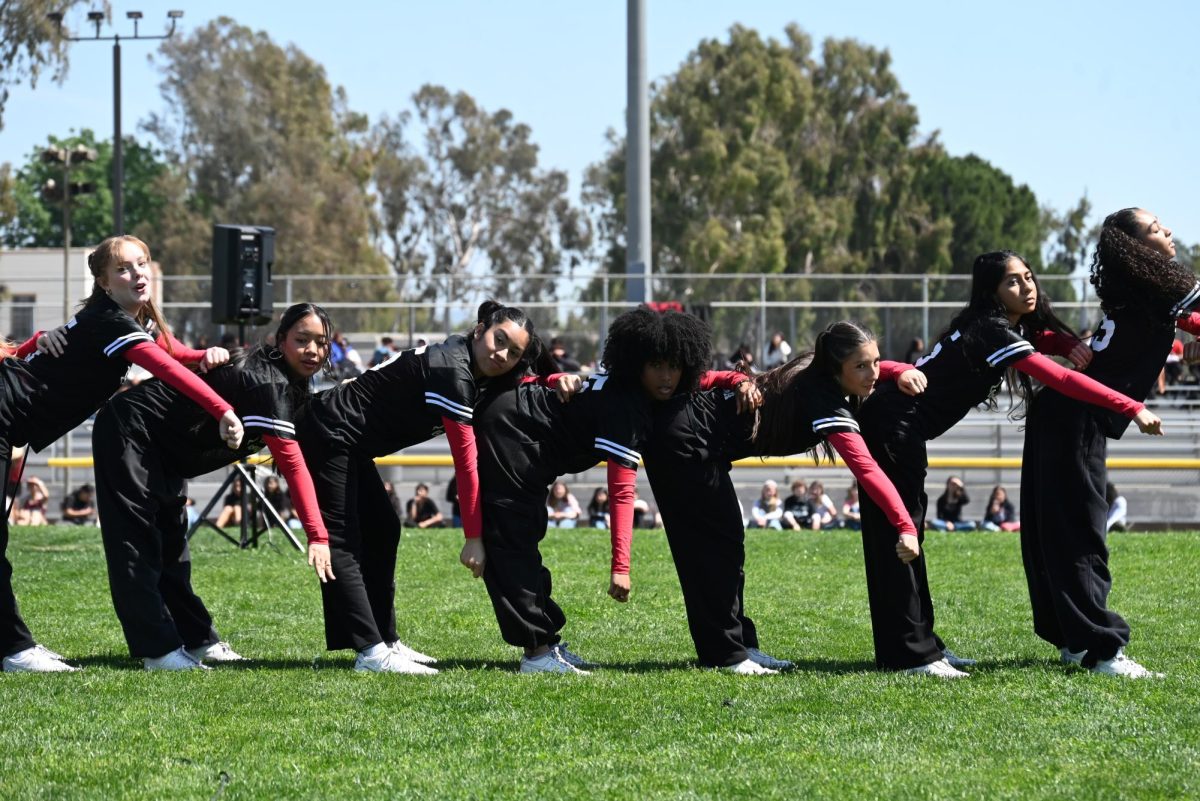
K-pop groups usually follow the same style: artists usually debut in groups, have lots of choreography during their performances, distribute photocards and lightsticks as merchandise at their concerts and unfortunately fall into the harsh Korean beauty standards of pale skin and extreme skinniness.
However, K-pop has received more and more contempt as its popularity has grown in the music industry. Instead of brushing K-pop to the side if they don’t listen to it, people often turn to bad-mouthing it.
While receiving hate is common among any genre of music, a lot of this hate is reserved for K-pop, and in truth, a majority is driven by blatant racism.
The first thing Americans usually hate about music in a foreign language is the genuine fact that it’s not in English – this hate isn’t limited to just K-pop, as we’ve seen lots of American outrage at Bad Bunny’s Superbowl performance because it was in Spanish. Yet, K-pop tends to get the worst of it.
America has been one big mixing pot for decades, especially in California, where diversity has been ordinary in both its culture and history. So it’s not much of a surprise that Spanish and Portuguese music is more accepted, mostly because California in specific is made up of a large Spanish-speaking population – with California being one of America’s most culturally-relevant states, it’s obvious that Latin-American culture has been more normalized nation-wide.
But the Korean language hasn’t had the same response. K-pop artists always receive the most criticism, backlash and belittlement, most likely due to the fact they’re Asian.
A lot of the K-pop industry, though in Korean, is based in the United States because of its large fanbase in the country, particularly resonating with teenagers.
Unfortunately, K-pop’s main audience is looked down upon for liking “traditionally cringy things.” And that present hate is only boosted by racism.
For instance, Justin Bieber’s audience in the 2010s was belittled just because most of them were young girls. That scrutiny was mostly aimed at his audience just for existing whereas the scrutiny that Justin Bieber received was minute in comparison. But even so, that hate was only a fraction of what K-pop artists face, emboldened by the fact that they’re Asian.
When misogyny targets the interests of teenagers, in particular, teenage girls, and racism is introduced as just another way to belittle something they already don’t like, people will take any opportunity to get their point across.
The space made by vapid criticisms against K-pop music as a whole even welcome shameless racist comments, most struggling to differentiate their own subtle racism from blatant discrimination – these comments driven by subtle racism are most commonly known as micro-aggressions.
For instance, classic rhetoric and comments aimed towards K-pop artists usually follow the same beats of playing on their “Asian-ness.” People will say some variation of things like “those Chinese/Japanese people” or those “Asian guys.”
These aren’t just any-old criticisms against music people don’t enjoy – they’re signs that racism runs deeper than most people think.
Grouping Korean, Chinese and even Japanese music into one category as if they aren’t three completely different languages is just one way that bigotry resurfaces when hating on K-pop needlessly.
It dates back to the beginning of Asian stereotypes becoming the butt of the joke. Saying all languages sound the same or all Asians look the same isn’t an astute observation – it’s racism.
These unnecessary racist comments prove just how uncomfortable people are with the fact that K-pop is starting to break into the mainstream rather than following the typical Asian stereotypes. Going against typecasts people believe you should fit into will almost always lead to more hate and racism.
But music is not to be focused on its origin – music is supposed to be the one thing that can transcend language and borders, it should be something that brings people together rather than tears them apart.