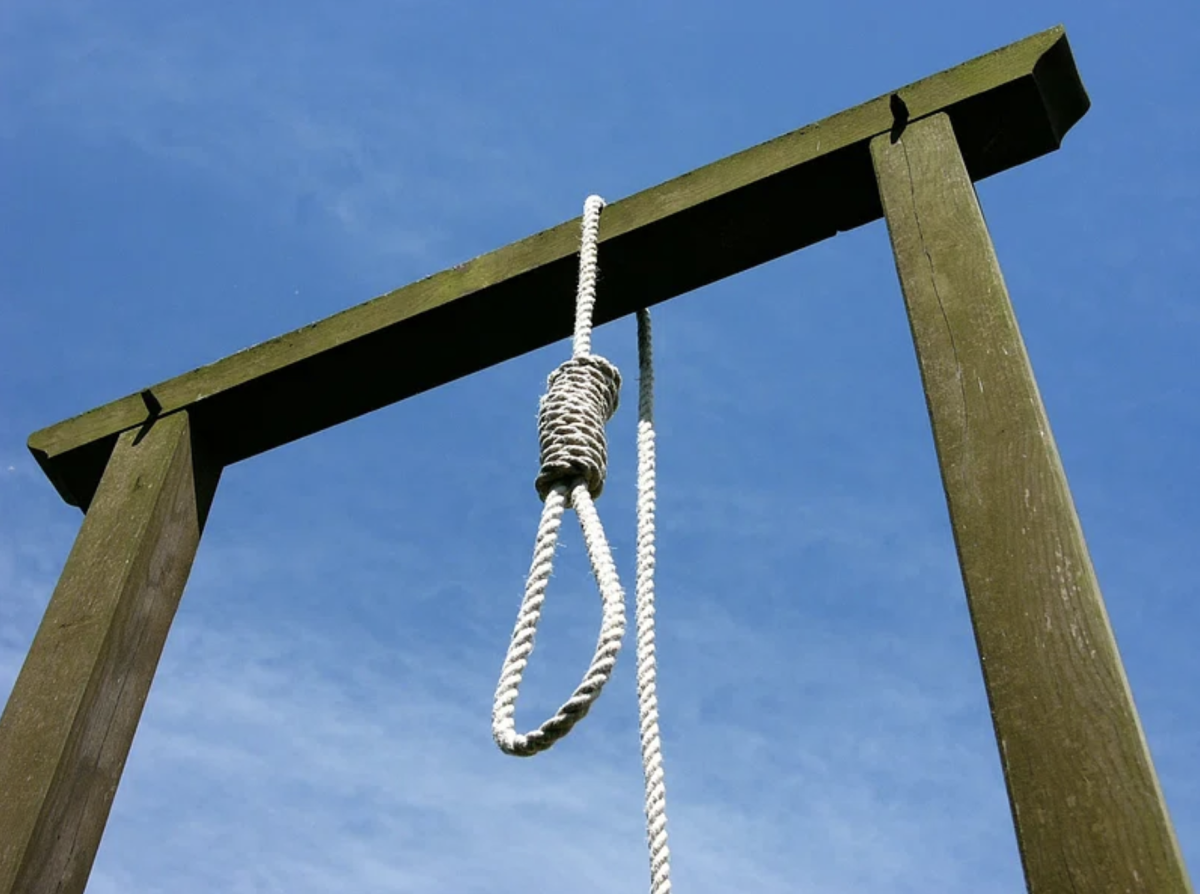
The government already decides who lives or dies, so it should at least protect the right people.
According to the FBI’s statement on crime rates in 2024, there was a violent crime committed every 25.9 seconds and a rape every 4.1 minutes. These atrocious crimes, which fundamentally change the lives of others, often go unpunished the way they deserve.
Although the death penalty is legal in 27 states, its lack of usage in others raises alarms about capital punishment’s place in our society.
A society of younger, more progressive citizens has brought about more scrutiny for a government that deports its immigrants and acts in deceptive secrecy. This has led to more constructive criticism about societal ills. But that is not to say the debate over the death penalty is new, only that it is reinvigorated.
This debate has been ongoing since 2008 in the famous Kennedy vs. Louisiana case where prescribing the death penalty to non-lethal sexual assault was deemed unconstitutional under the 8th Amendment.
This follows the federal legislation that states only crimes considered capital offenses, considered capable of invoking the death penalty, are crimes resulting in death. Any and all other crimes are ruled for imprisonment.
This has led to a devastating overcrowding of prisons, where what was once meant to be a rehabilitation center for producing functioning and safe citizens has become more of a holding facility.
This is exacerbated by the fact that as much as 5% of convictions are retrospectively deemed wrongful convictions. With 2.3 million Americans being incarcerated every year, 5% is not negligible.
These existing disparities highlight arguments about how the extension of the death penalty might include those innocent or faultless.
Clearly, the government is flawed and has forgotten its original purpose to maintain society.
In widening the death penalty, the government must fundamentally change – its process, its systems and its prejudices are holding societal safety.
Administrations flood prisons, become lax on their punishments and fail to enforce justice for all who are assaulted.
This is exacerbated when action fails to equate subsequent discipline. As of now, rape and sexual assault cases are left out when considering the death penalty — these heinous crimes are arguably more destructive for victims than murder.
As many as 47% of victims of violent sexual assault crimes report strong signs of distress after the fact. Some of these long-lasting effects of sexual assault include trauma manifesting as Post Traumatic Stress Disorder (PTSD), severe depression, dependence on substance use and suicidal tendencies.
Perpetrators of these crimes are punished with a range of prison sentences ranging from mere months to 25 years, sometimes even less if they’re not repeat offenders. But that is of no solace to victims who are forever changed.
Not only do some victims feel that their assailants’ incarceration is not enough of a drastic measure — not just for their own mental wellbeing, but also in hopes of preventing a repeat offense, which has a 65% chance happening — but others argue that sexual predators should be next in line to face the death penalty.
This ideology is evidently spurred on by victims who seek to resolve their own feelings and achieve what they deem to be retribution.
And while the prison system will always be a flawed institution, a solution that puts those who would readily and explicitly exploit others on the chopping block shows promise.
The death penalty for sexual assault would discourage others considering violating crimes. A dangerous individual might be able to accept a few years in prison, but perhaps not impending death at the hands of the government.
If the government has abandoned its rehabilitation ideology in prisons, it shouldn’t hold anything back when hearing the pleas of those eternally wounded, physically, mentally and often both.
There are too many lives at stake for them to make the mistake of letting perpetrators of harm walk free.