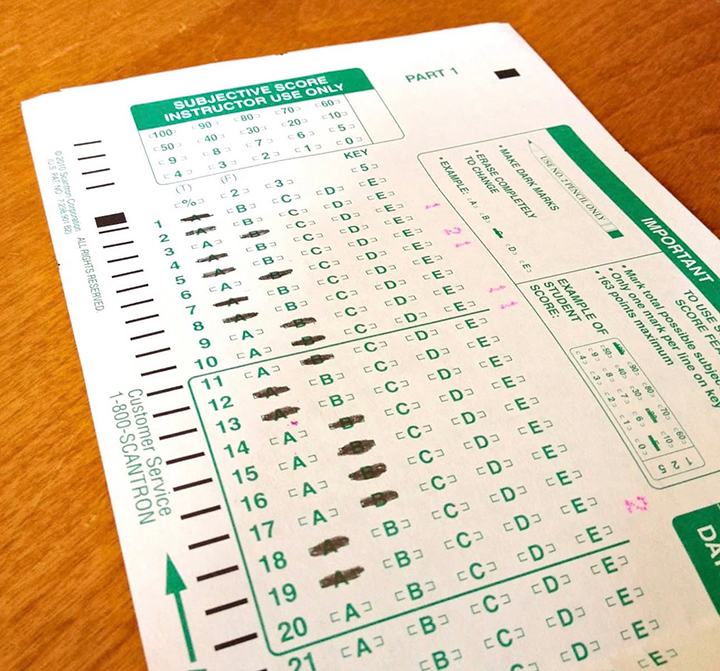
Colleges don’t want high test scores, they just want homogenized ones.
Students are required to take standardized tests like the SBAC, SAT and ACT – which test their understanding of standardized curriculum of math, ELA and science – periodically throughout their academic careers, but a particular stake is placed on the test scores of high schoolers.
For high school seniors, their test scores can make or break their college applications, but they don’t know exactly why.
Students are expected to average the expected score of their high school and neighboring rivals, meaning they’re all expected to know the same material to the exact same extent – not to the best of their abilities, but to the same extent as everyone else.
These averaged test scores are calculated on only a few topics that academic organizations like College Board deem worthy of being examined for collegial consideration.
Basically, the American education system classifies students as robots who intake the same amount of knowledge and expect them to flourish in the box they’ve been put in.
It’s worsened by the scores on your standardized tests being the base of a student’s future opportunities. The higher the score, the more opportunities that are available because colleges and scholarships inspect test scores when considering students.
Though there was mass deregulation of considering test scores for college applications during the covid-19 pandemic, the Ivy League schools, who originally pioneered the thought, have been returning to accepting standardized test scores. This spells the University of California system, which includes the most applied to public schools in the nation, who have been inching closer to reviewing test scores for their applicants, even if it’s not fair.
Standardized test scores don’t really take into account the fact that students are not robots. Not only are students human, but they are teenagers who can only absorb so much information, especially when weighing that not all students share the same strengths that they are tested on.
Just because one student isn’t strong in the typical ELA, math or science doesn’t mean they don’t have strengths in other areas. Plenty of students have strengths and talents that go overlooked because their skills are not considered in the main concepts that tests like the SATs and ACTs look for.
This is compounded by the fact that standardized tests were originally eliminated because they were deemed unfair for, one, students whose strengths could not be quantified, and two, for students who did not have access to the resources that many others did – this is reason enough to understand how standardized testing should not be the end all, be all for students’ futures.
But standardized tests should not be eliminated completely.
Ultimately, they are crucial for collecting data on how impactful teachers’ methods are, not to mention how well a school prepares their students on common, core subjects.
Standardized tests can be very useful in the same way that they show how well a school’s students are doing.
In addition to test scores being used to measure the teachers’ educational impact, standardized tests can also be used to open doors and opportunities for scholarships. Scholarships may use standardized test scores to recognize students who need their money and deservedly worked hard for it.
However, there are so many students that don’t get considered for any scholarships because the school system doesn’t provide an opportunity for their skills and talents to be shown, as academic skills are shown through test scores.
All of these skills go overlooked because opportunities depend on the scores students receive on these limited, inopportune standardized tests.
Expecting the same amount of knowledge from a bunch of students who learn differently and have different strengths and weaknesses that may not always be recognized by these tests is absurd.
All of the talent and knowledge that goes overlooked makes it completely unfair to students who aren’t given another thought or chance due to their lower test scores.
A test score shouldn’t be the final determiner for how a student’s future plays out – it should just be one piece.