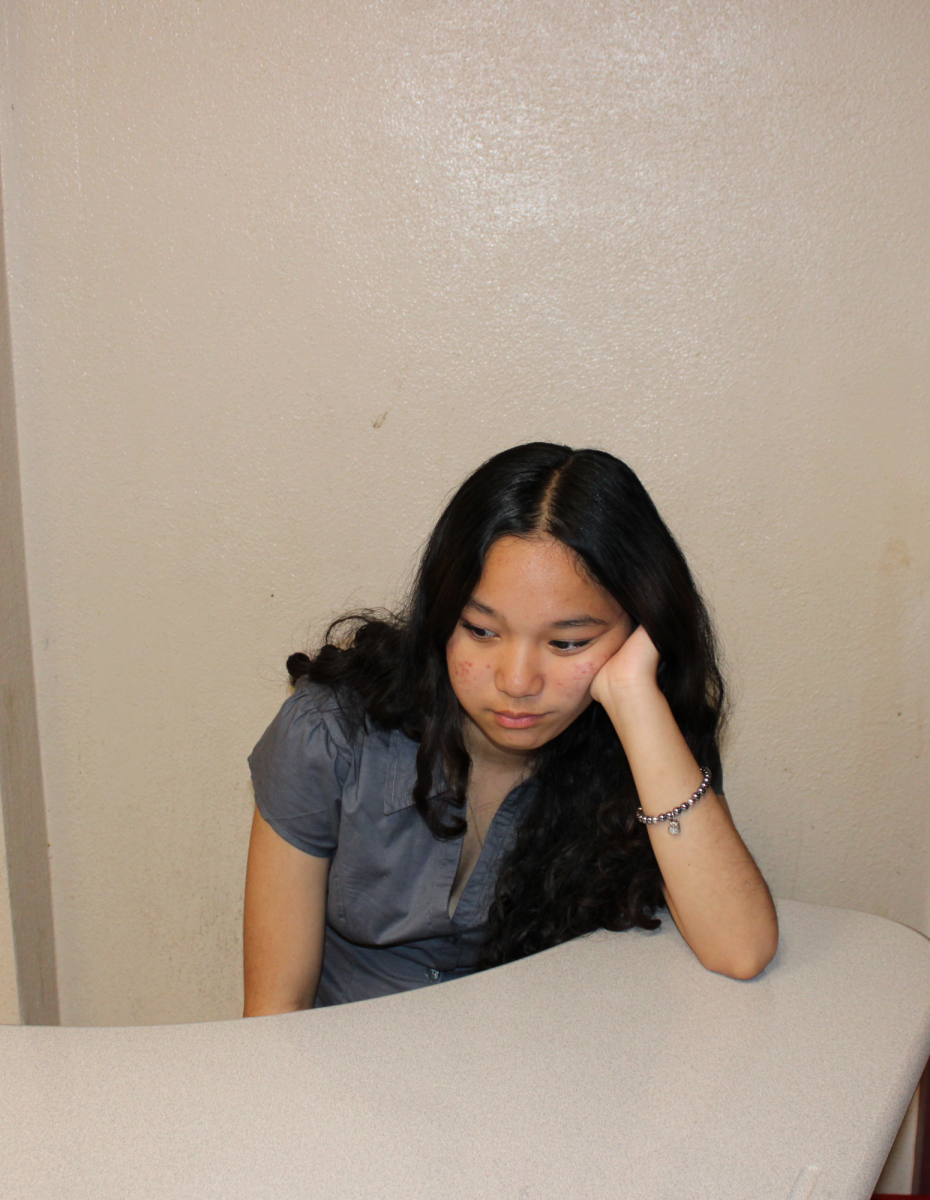
If you take a quick glance up from your computers, you will instantly notice that the walls surrounding us during the school day aren’t the most exciting. In fact, it’s far from it.
Introducing beige.
The beige that covers the classrooms and the halls are utterly uninteresting. But at the end of the day, it’s just a color, right? Wrong. As a matter of fact, colors carry the weight of affecting your mood, temperature and more.
According to Stephen Westland, colors affect the brain not on the basis of vision but instead on the basis of light. Retinal cells send signals to the visual cortex to recognize color and then to the hypothalamus, a site of self-regulation. Although the hypothalamus can’t recognize images, it can affect the viewer’s mood, temperature, sleep, heart rate, hunger and breathing patterns.
Warm colors cause slight elevations of blood pressure in children, and cooler temperatures cause a slight decrease in blood pressure. Particular hues, such as orange, encourage enthusiasm and creativity, while hues of yellow bring forth a sense of happiness. Children absorb different colors in different ways, and it contributes to the way that we think, feel and behave.
Considering the power of color over our mental state, it raises questions of why we neglect to care about something with such a large impact on our psychological well-being.
It’s unfair to the student and staff populations at Van Nuys High School to spend nearly seven hours of their day in an environment that fails to be conducive to their learning. Students are forced to be in classrooms despite the mundaneness of the color scheme, with no escape.
But that does not mean our hands are tied from resolving this issue.
For instance, Lincoln Park High School has made the bold move toward replacing its beige-colored walls with a comforting summer blue. Volunteers have gathered together to make this effort into a reality. At the heart of the community’s paint job was the desire to nurture the country’s future generation.
This would not be the easiest task for Van Nuys High School, as extensive approvals and permissions are necessary. However, the psychological benefits to the students alone would boost morale and outweigh the efforts behind the scenes.
The truth is that we spend a lot of our school day in classrooms hard at work on our assignments. Our focus during lectures and participation in discussions can be enhanced with the extra stimulation of a pleasing environment.
Many students, including myself, would happily volunteer to repaint our school for the betterment of our learning environment. The color would be decided by the student body with the input of teachers and staff members, as the change impacts the administration as much as the students.
Now, let’s revisit the average classroom experience. You’ve been staring at your computer screen, eyes straining from that challenging assignment. But instead of glancing up at unexciting beige walls, you see a color that inspires- a soft yellow or a refreshing blue. Equipped with the serotonin you just gained from that joy-inducing color, you’re able to charge through that assignment and successfully click submit.
No change is too small to make an impact on our school, and it’s time to consider how we can improve our learning experience.