What can’t be swatted away with a crocodile tears-apology post is defended by rabid fans – even if it’s racist.
Coachella 2026, an annual music festival held in Indio, Calif. since 1999, began April 10. And thus ensues two weekends of music artists coming out to perform and thousands of people droning to attend – for better or worse.
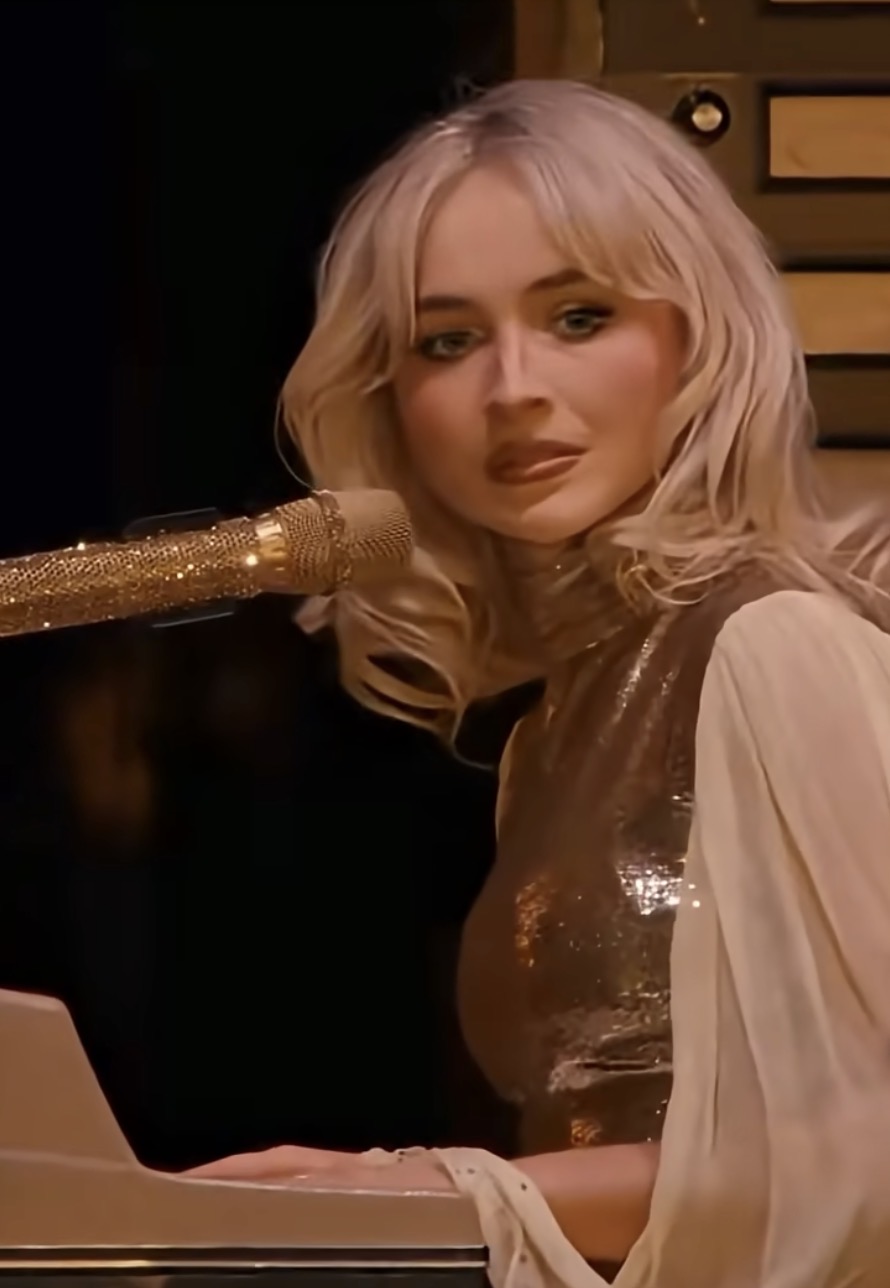
One of the main attractions, Sabrina Carpenter as one of the three headliners, also attracted some controversy that began on the internet after her first weekend performance.
After she finished performing her smash song, “Please, Please, Please,” Carpenter was preparing for her next song as fans cheered. Among the cheers, one of her fans did a ‘zaghrouta’ – a high-pitched ululation used to express joy or celebrate at festive events, prevalent in Arab, Middle Eastern and some North African cultures.
The issue was not the fact that one of her fans did a zaghrouta, the issue was Sabrina’s reaction.
These types of responses are completely disrespectful and insensitive towards the culture behind zarghroutas. But not unpredictable for someone like Sabrina Carpenter.
Even in her apology post, Carpenter failed to recognize her insensitivity and continued to address zaghroutas as yodels. And reactions were mixed.
Lots of people defended Sabrina’s response, but not in the right way.
On social media, especially TikTok, a lot of people had not only been defending Sabrina’s response, but also trying to defend her reaction with more covert racism. Comments and posts along the lines of, “Well, the call was annoying anyway,” and “Everyone’s so dramatic, if someone was making that weird noise, I’d be annoyed too.”
These kinds of statements that openly use microaggressions to make racist and offensive comebacks to defend Sabrina Carpenter’s ignorant reaction are not only unwarranted, but dangerous.
However, it stems from a much more stealthy perception of racism and its perpetrators.
This Sabrina Carpenter situation is a great example of how quickly and how low people are willing to go defend a celebrity, especially if they’re white. Compared to how rapidly other celebrities were slandered for microaggressive comments, Sabrina Carpenter has gotten nowhere near the worst of it.
Similar to Sabrina’s situation, in 2015, the actress Raven-Symone made a similarly offensive statement on “The View.”
Raven-Symone stated that black people needed to give their kids “white-sounding” names in order for them to get more job opportunities. Additionally, she said that she wouldn’t hire a person with a “black-sounding” name, and tried making a joke of her statement.
Afterwards, Raven-Symone received harsh backlash. People were angry that she was using racism to gain attention from the media and even moreso, Raven-Symone had shown everybody that assumptions and stereotypes against black people were not limited to white people.
Like Sabrina, Raven-Symone made an insensitive apology post on Facebook. Her apology barely apologized for her statement and dove into victimizing herself.
However, both Sabrina Carpenter and Raven-Symone had made offensive comments stemming from a joke. The only difference was that Raven-Symone was absolutely dragged through the mud on social media, including her own father, as a consequence for an offensive joke.
Sabrina Carpenter still has people jumping to defend her and even using more racism to back her up. But her status as a burgeoning pop star elicits a different reaction than her comments normally would.
Her persona as a witty “coquette-bombshell” seemingly clears her wrongdoings as they are attributed to an accident or a lapse of judgement – a privilege that many others aren’t afforded, particularly non-White celebrities like Raven-Symone.
Clearly, there is an ongoing pattern where society picks and chooses which celebrities to defend and which celebrities to cancel. And uncoincidentally, the celebrity that people and fans choose to defend is always white – they always want them to be the final victim.