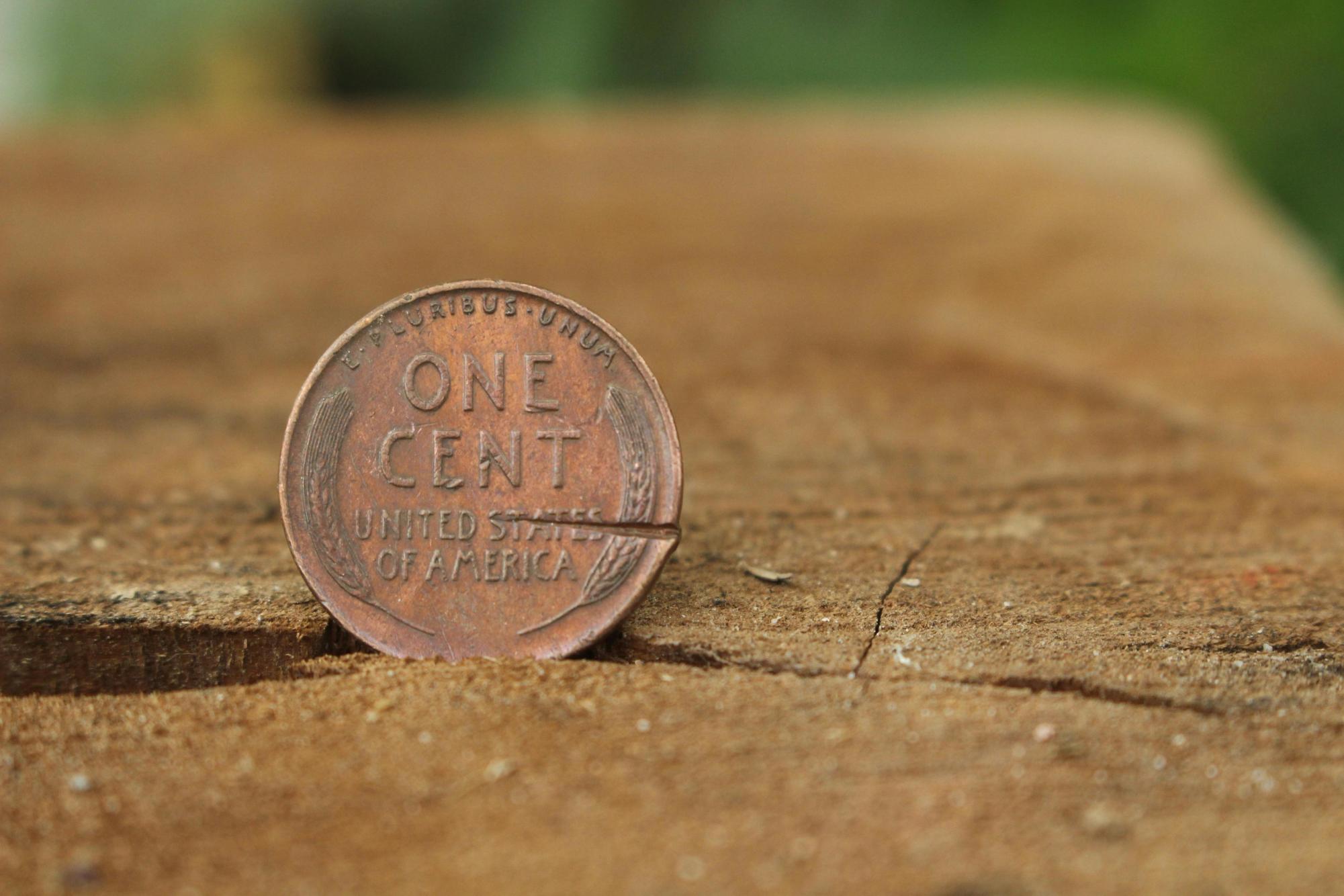

It costs 3.69 cents to make a coin worth one cent.
The math finally caught up to the U.S. penny. The U.S. Mint struck its final one-cent coin last November at the Philadelphia Mint, ending 232 years of production and saving taxpayers an estimated $56 million a year. First produced in 1793, the penny was the oldest circulating coin in the U.S. until the Mint pressed its last one.
With cash payments already declining and each penny costing nearly four times its face value to make, the Treasury decided the coin had outlived its purpose. Pennies remain legal tender, and existing coins will remain in circulation for years. But for cash transactions, prices will now round to the nearest five cents, a shift that some students and consumers worry could push rising costs even higher.
Some economists suggest the nickel could be next, as it costs about 14 cents to produce but is only worth its five-cent face value.
Pennies are made mostly of zinc with a copper coating, and both metals have steadily risen in price. A penny once had real purchasing power.
In the early 1800s, one cent could buy candy, a biscuit or a newspaper. By the mid-1900s, it could still buy a piece of bubblegum.
“You used to be able to buy small things like a cheap plastic toy from a discount store with a couple pennies,” Jonathan Roberts, 74 and a grandparent of a student, said. “Now there isn’t anything you can buy with a couple pennies at all. It’s not like it used to be when I was growing up.”
Most students at Van Nuys said the penny’s disappearance won’t change their daily lives.
“Pennies no longer being made won’t affect me at all,” freshman Jayana Harvey said. “It’ll make my life way easier. I hate how, whenever I pay with cash and I’m missing one cent, I have to give them another dollar and get the change back.”
But not everybody sees the penny as worthless.
“I actually like pennies,” freshman Liam Slater said. “I get that it’s making the government lose money and it’ll cause inflation to go down a tiny bit, but I think they’re cool because pennies are imprinted with what I think is the best president, Abraham Lincoln.”
Some consumers worry rounding to the nearest five cents could lead to higher prices if retailers round up more often.
“I think rounding the prices will help, but honestly it just depends on the company,” Harvey said. “Some companies might only round up the prices and it’s gonna make a lot of people frustrated.”
Slater also said the rounding could make things worse.
“Price rounding would make the cost of items go up,” he said. “Prices are already high enough because of inflation, so it’s unnecessary to make stuff cost even more.”
Declining cash usage is part of the picture too.
According to Autobooks, cash usage in the U.S. dropped from 32% in 2017 to 16% in 2023. Over 65% of small businesses now rely on digital payment methods and 80% of U.S. consumers prefer contactless transactions.
Still, cash is not going away entirely. Some students still rely on it because they don’t have credit or debit cards
“I’ve never used digital transactions in my life,” Harvey said. “My parents don’t trust me with their credit or debit cards.”
She’s not the only student who depends on cash.
“I pay with cash most of the time,” freshman Mariam Feslyan said. “I don’t even have a credit card.”
Harvey, who has never used digital transactions and relies on cash, looks ahead to what the future holds for physical currency.
“I can totally see cash no longer being used in much later years,” said Harvey. “I sure hope that it isn’t anytime soon, since I have never used digital transactions and I don’t have access to it. That means I’ll have to learn about a whole new way to pay and I’ll be cut off from paying for anything until I am able to pay digitally.”